
On this page
What are the symptoms of DLBCL?
The first sign or symptom of DLBCL you get may be a lump, or several lumps that continue to grow. You might feel or see them on your neck, armpit or groin. These lumps are enlarged lymph nodes (glands), swollen by having too many cancerous B-cells growing in them.
They often start in one part of your body, and then spread throughout your lymphatic system and to other parts of your body including your:
- spleen
- thymus
- lungs
- liver
- bones
- bone marrow
- central nervous system (CNS)
- other organs
Organs of your lymphatic system – Spleen and thymus
Your spleen is an organ that filters your blood and keeps it healthy. It is also an organ of your lymphatic system where your B-cell lymphocytes live and produce antibodies to fight infection. It is on the left side of your upper abdomen under your lungs and near your stomach (tummy).
When your spleen gets too big, it can put pressure on your stomach and make you feel full, even if you haven’t eaten very much.
Your thymus is also part of your lymphatic system. It is a butterfly shaped organ that sits just behind your breast bone in the front of your chest. Some B-cells also live and pass through your thymus.
What are the general symptoms of lymphoma?
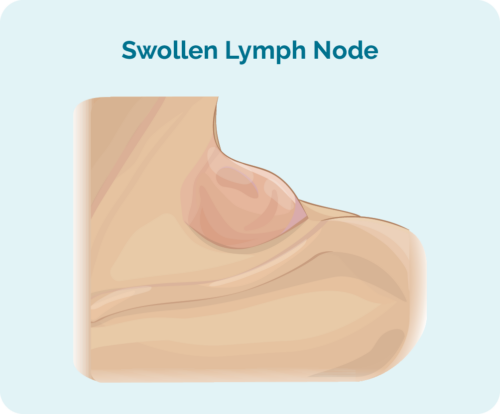
General symptoms of lymphoma may include:
- B-symptoms (see below)
- swollen lymph nodes (glands)
- feeling unusually tired (fatigued)
- feeling out of breath
- itchy skin
- infections that don’t go away or keep coming back
- changes to your blood tests
- low red cells and platelets
- too many lymphocytes and/or lymphocytes that do not work properly
- lowered white cells (including neutrophils)
- high lactic acid dehydrogenase (LDH) – a type of protein used to make energy. If your cells are damaged by your lymphoma, LDH can spill out of your cells and into your blood
- high beta-2 microglobulin – a type of protein made by lymphoma cells. It can be found in your blood, urine or cerebral spinal fluid
B-symptoms
B-symptoms are a group of three distinct symptoms that some people with lymphoma can get. They occur together and may indicate that your lymphoma is more advanced. Contact your doctor as soon as possible if you get B-symptoms.
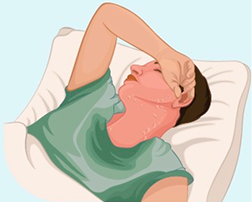 Night sweatsDrenching night sweats, where your clothes and bedding become saturated.
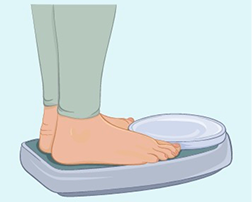 Weight lossLosing weight without trying, and without other reason.
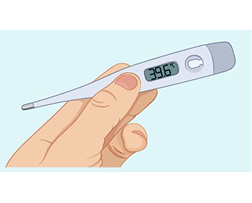 FeverA high fever of 37.5° or more that keeps coming back or does not go away even when you don’t have an infection. You may even get chills.
When should I see a doctor about DLBCL symptoms?
You should contact your doctor if:
- You have swollen lymph nodes that do not go away, or if they are larger than you would expect for an infection.
- You are often short of breath without reason.
- You are more tired than usual and it does not get better with rest or sleep.
- You notice unusual bleeding or bruising (including in your poo, from your nose or gums).
- You develop an unusual rash (a purple or red spotty rash can mean you have some bleeding under your skin).
- Your skin is more itchy than usual.
- You develop a new dry cough.
- You experience B-symptoms.
Other causes
It’s important to note that many of the signs and symptoms of DLBCL can be related to causes other than cancer. For example, swollen lymph nodes can also happen if you have an infection. Usually though, if you have an infection, the symptoms will improve and the lymph nodes will return to normal size in a few weeks.
With lymphoma, these symptoms will not go away. They may even get worse.
How is DLBCL diagnosed?
Diagnosing DLBCL can sometimes be difficult and can take several weeks.
If your doctor thinks that you may have lymphoma, they will need to organise a number of important tests. These tests are needed to either confirm or rule out lymphoma as the cause for your symptoms. Because there are several different subtypes of DLBCL, you may have extra tests to find out which one you have. This is important because the management and treatment of your subtype may be different to other subtypes of DLBCL.
From the biopsy, your doctor will be able to tell you if you have a type of DLBCL called “germinal centre B-cell” (GCB) or “activated B-cell” (ABC).
Biopsy
To diagnose lymphoma you will need a biopsy. A biopsy is a procedure to remove part, or all of an affected lymph node and/ or a bone marrow sample. The biopsy is then checked by scientists in a laboratory to see if there are changes that help the doctor diagnose lymphoma.
When you have a biopsy, you may have a local or general anaesthetic. This will depend on the type of biopsy and what part of your body it is taken from. There are different types of biopsies and you may need more than one to get the best sample.
Core or fine needle biopsy
Core or fine needle biopsies are taken to remove a sample of swollen lymph node or tumour to check for signs of lymphoma.
Your doctor will usually use a local anaesthetic to numb the area so you don’t feel any pain during the procedure, but you will be awake during this biopsy. They will then put a needle into the swollen lymph node or lump and remove a sample of tissue.
If your swollen lymph node or lump is deep inside your body the biopsy may be done with the help of ultrasound or specialised x-ray (imaging) guidance.
You might have a general anaesthetic for this (which puts you to sleep for a little while). You may also have a few stitches afterwards.
Core needle biopsies take a bigger sample than a fine needle biopsy.
Excisional node biopsy
During this procedure, a surgeon will remove the whole lymph node or lump and send it to pathology for testing. You may have a general anaesthetic which will put you to sleep for a little while, so you stay still and feel no pain.
You will have a small wound with a few stitches, and a dressing over the top.
Stitches usually stay in for 7-10 days, but your doctor or nurse will give you instruction on how to care for the dressing, and when to return to have the stitches out.
Excisional node biopsies are more reliable than fine needle or core needle biopsies for diagnosing lymphoma.
Blood tests
Blood tests are taken when trying to diagnose your lymphoma, but also throughout your treatment to make sure your organs are working properly and can cope with your treatment.
Results
Once your doctor gets the results from your blood tests and biopsies they will be able to tell you if you have lymphoma and may also be able to tell you what subtype of lymphoma you have. They will then want to do more tests to stage and grade your lymphoma.
What are the stages and grades of DLBCL?
Once you have been diagnosed with DLBCL, your doctor will have more questions about your lymphoma. These will include:
- What stage is your lymphoma?
- What grade is your lymphoma?
- What subtype of DLBCL do you have?
What does staging mean?
Staging refers to how much of your body is affected by your lymphoma – or how far it has spread from where it first started.
B-cells can travel to any part of your body. This means that lymphoma cells (the cancerous B-cells), can also travel to any part of your body. You will need to have more tests done to find this information. These tests are called staging tests and when you get results, you will find out if you have stage one (I), stage two (II), stage three (III) or stage four (IV) DLBCL.
Your stage of DLBCL will depend on:
- How many areas of your body have lymphoma
- Where the lymphoma is including if it is above, below or on both sides of your diaphragm (a large, dome-shaped muscle under your rib cage that separates your chest from your abdomen)
- Whether the lymphoma has spread to your bone marrow or other organs such as your liver, lungs, skin or bone.
Stages I and II are called ‘early or limited stage’ (involving a limited area of your body).
Stages III and IV are called ‘advanced stage’ (more widespread).Stage 1 and 2 lymphoma are considered early stage, and stage 3 and 4 are considered advanced stage lymphoma.
Stage 1
One lymph node area is affected, either above or below the diaphragm*.
Stage 2
Two or more lymph node areas are affected on the same side of the diaphragm*.
Stage 3
At least one lymph node area above and at least one lymph node area below the diaphragm* are affected.
Stage 4
Lymphoma is in multiple lymph nodes and has spread to other parts of the body (e.g. bones, lungs, liver).Your diaphragm is a dome shaped muscle that separates your chest and your abdomen.
Extra staging information
Your doctor may also talk about your stage using a letter, such as A,B, E, X or S. These letters give more information about the symptoms you have or how your body is being affected by the lymphoma. All this information helps your doctor find the best treatment plan for you.
| Letter | Meaning | Importance |
|---|---|---|
| A or B |
|
|
| E & X |
|
|
| S |
|
|
(Your spleen is an organ in your lymphatic system that filters and cleans your blood, and is a place your B-cells rest and make antibodies)
Tests for staging
To find out what stage you have, you may be asked to have some of the following staging tests:
Computed tomography (CT) scan
These scans takes pictures of the inside of your chest, abdomen or pelvis. They provide detailed pictures that provide more information than a standard X-ray.
Positron emission tomography (PET) scan
This is a scan that takes pictures of the inside of your whole body. You will be given and needle with some medicine that cancerous cells – such as lymphoma cells absorb. The medicine that helps the PET scan identify where the lymphoma is and the size and shape by highlighting areas with lymphoma cells. These areas are sometimes called “hot”.
Lumbar puncture
A lumbar puncture is a procedure done to check if you have any lymphoma in your central nervous system (CNS), which includes your brain, spinal cord and an area around your eyes. You will need to stay very still during the procedure, so babies and children may have a general anaesthetic to put them to sleep for a little while when the procedure is done. Most adults will only need a local anaesthetic for the procedure to numb the area.
Your doctor will put a needle into your back, and take out a little bit of fluid called “cerebral spinal fluid” (CSF) from around your spinal cord. CSF is a fluid that acts a bit like a shock absorber to your CNS. It also carries different proteins and infection fighting immune cells such as lymphocytes to protect your brain and spinal cord. CSF can also help drain any extra fluid you may have in your brain or around your spinal cord to prevent swelling in those areas.
The CSF sample will then be sent to pathology and checked for any signs of lymphoma.
Bone marrow biopsy
A bone marrow biopsy is done to check if there is any lymphoma in your blood or bone marrow. Your bone marrow is the spongey, middle part of your bones where your blood cells are made. There are two samples the doctor will take from this space including:
- Bone marrow aspirate (BMA): this test takes a small amount of the liquid found in the bone marrow space.
- Bone marrow aspirate trephine (BMAT): this test takes a small sample of the bone marrow tissue.A bone marrow biopsy can be done to help diagnose or stage lymphoma
The samples are then sent to pathology where they are checked for signs of lymphoma.
The process for bone marrow biopsies can differ depending on where you are having your treatment, but will usually include a local anaesthetic to numb the area.
In some hospitals, you may be given light sedation which helps you to relax and can stop you from remembering the procedure. However many people do not need this and may instead have a “green whistle” to suck on. This green whistle has a pain killing medication in it (called Penthrox or methoxyflurane), that you use as needed throughout the procedure.
Make sure you ask your doctor what is available to make you more comfortable during the procedure, and talk to them about what you think will be the best option for you.
What does grading mean?
Your lymphoma cells have a different growth pattern, and look different to normal cells. The grade of your lymphoma is how quickly your lymphoma cells are growing, which affects the way look under a microscope. The grades are Grades 1-4 (low, intermediate, high). If you have a higher grade lymphoma, your lymphoma cells will look the most different from normal cells, because they are growing too quickly to develop properly. An overview of the grades is below.
- G1 – low grade – your cells look close to normal, and they grow and spread slowly.
- G2 – intermediate grade – your cells are starting to look different but some normal cells exist, and they grow and spread at a moderate rate.
- G3 – high grade – your cells look fairly different with a few normal cells, and they grow and spread faster.
- G4 – high grade – your cells look most different to normal, and they grow and spread the fastest.
All this information adds to the whole picture your doctor builds to help decide the best type of the treatment for you.
It is important that you talk to your doctor about your own risk factors so you can have clear idea of what to expect from your treatments.
What do genetic tests mean for DLBCL?
The tests used to check for any genetic mutations are called cytogenetic tests. These tests look to see if you have any changes to your chromosomes or genes.
We usually have 23 pairs of chromosomes, and they are numbered according to their size. If you have DLBCL, your chromosomes may look a little different.
What are genes and chromosomes
Each cell that makes up our body has a nucleus, and inside the nucleus are the 23 pairs of chromosomes. Each chromosome is made from long strands of DNA (deoxyribonucleic acid) that contain our genes. Our genes provide the code needed to make all the cells and proteins in our body, and tells them how to look or act.
If there is a change (variation) in these chromosomes or genes, your proteins and cells will not work properly.
Lymphocytes can become lymphoma cells due to genetic changes (called mutations or variations) within the cells. Your lymphoma biopsy may be looked at by a specialist pathologist to see if you have any gene mutations.
Double hit and triple hit mutations
Some people with DLBCL may have mutations in 2 or 3 specific genes which makes the lymphoma more aggressive than DLBCL without the mutations. These mutations are called rearrangements. The genes involved always involve a gene called MYC, and a gene called BCL2 and / or BCL6.
Double expressor
In some cases, you may not have a rearrangement in your genes, but proteins the genes control may be over expressed on your lymphoma cells. This means you have too much of the MYC or BCL proteins on your cells, which may make it a little more difficult to treat.
Rearrangement and protein expression compared
| MYC, BCL2 or BCL6 rearrangement | Overexpression of MYC and BCL proteins | |
|---|---|---|
| Double hit | Yes | Usually, but not always |
| Triple hit | Yes | Usually, but not always |
| Double expressor | No | Yes |
Normal MYC and BCL genes help make proteins needed for your cells to grow and develop properly. If you have a rearrangement in these genes, the protein is unable to support healthy cell growth and lymphoma can develop. DLBCL with these rearrangements are called either double hit lymphoma (DHL) or triple hit lymphoma (THL). They are also sometimes called high-grade B-cell lymphoma (HGBL).
Testing for mutations
If you have a high-grade lymphoma your doctor may wish to do further tests on your biopsies to see if you have any genetic rearrangements or double expressing proteins. The test is called Flourescence In Situ Hybridization (FISH) and looks at the different genetic markers on your biopsy samples.
However, this test is not covered by the Medicare benefits scheme so is often done at additional cost to patients, meaning you will have to pay for the tests. It can be quite expensive, and the cost can vary depending on where you get it done. Often, the treatment will not change, but in some cases it might. If the treatment would change if you had these variations, then you may consider getting the test done, or you may like to know just for interest sake.
If you choose not to have the test you will still have good care and treatment options.
Other mutations found in DLBCL
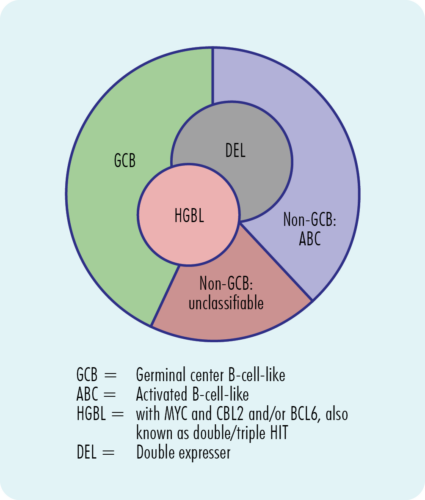
Another genetic change that can occur in DLBCL is “double expressor”. This is different to double hit DLBCL because instead of having a rearrangement of genes, the genes are in the right place but are overexpressed, meaning there are too many of the two genes.
It is also important for your doctor to know what proteins (or receptors) are on your lymphoma cells. While chemotherapy works by killing fast growing cells, other medications work by targeting a specific protein on the lymphoma cell.
So if you have particular receptors, you may receive chemotherapy and one of the targeted monoclonal antibodies. For example:
- If you have protein called CD20 on your lymphoma cells, you may receive a monoclonal antibody medication that targets CD20, such as rituximab (Mabthera or Rituxan), obinutuzumab or ofatumumab. An additional medication that targets CD20, that is only available in clinical trials is mosunetuzumab.
- If you have a protein called CD79b on your lymphoma cells you may receive a medication that targets that protein, called polatuzumab vedotin.
As you can see, understanding some of the genetics of your lymphoma is important to understand your treatment options. Please always ask your doctor to explain your results to you and how these results impact your options.
Ask your doctor if knowing the results will change the type of the treatment you will get, and if there are any benefits to knowing the results in your situation.